
There is a photo in almost every Cape Town home of someone leaving for their matric dance looking completely perfect. What the photo does not show is what that hair looked like at midnight. By the last dance, curls have dropped, pins have migrated, and the sleek style that took two hours has met the South-Easter, a hundred hugs and three hours of dancing.
Matric dance season runs through the last stretch of the school year, with most schools celebrating somewhere between late winter and November, right before final exams. For many families it is the biggest formal event of a young person's life so far, and the pressure to get everything right is real. The good news is that hair that lasts all night is not luck. It is planning.
Matric dance hair almost never goes wrong where people expect.
The night is longer than anyone tells you
A matric dance is not a two-hour event. It starts with photos at home in the afternoon sun. Then more photos at the venue. Then a long evening of sitting, standing, hugging relatives, dancing, and eventually the after-party. By the time it ends, that hairstyle has been working for eight hours or more, much of it under hot lights or outdoors in November weather.
This is why the prettiest style on Pinterest is not always the right style. Loose Hollywood waves photograph beautifully for the first hour and then slowly surrender to humidity and movement. A style chosen only for how it looks at 4pm can be a very different style by 11pm. Planning for the whole night, not just the arrival photo, is the single biggest thing that separates hair that lasts from hair that does not.
The other thing that catches people out is timing. Matric season collides with exam season, and every matric family wants the same Saturday afternoons. The families who look calmest on the day are the ones who booked weeks earlier.
Start with the dress, not the hairstyle
The most common mistake is arriving with a hairstyle already chosen before anyone has thought about the dress. The neckline decides more than people realise. A high neckline or detailed bodice usually wants hair up and out of the way. A strapless or open-shoulder dress can carry hair down or half-up. A low back deserves to be seen, which means hair swept up or to one side.
Then there is hair itself. Fine, slippery hair that will not hold a curl needs a different approach from thick hair that holds everything but frizzes. The right question is never "what is trending" but "what will my hair still be doing happily at midnight". That is a conversation worth having with a stylist who can actually see and touch your hair, not a decision to make from a screen.
A good stylist will also ask about the evening itself. Outdoor venue or indoors? Lots of dancing planned? Any hair accessories, a tiara, fresh flowers, a clip with sentimental value? Each answer changes the plan.
The trial is not a luxury, it is the whole point
If one appointment matters more than any other, it is the trial. Book it two to three weeks before the dance, in the late afternoon if possible, so you can see exactly how the style wears over a few hours.
A trial does three things. It shows you whether the style you imagined actually suits you, which is a much nicer discovery to make three weeks early than on the day. It lets the stylist learn how your hair behaves, how it takes a curl, how heavy it is, where it slips. And it tests the whole look with the dress and accessories, so there are no surprises when it matters.
Come to the trial with your hair in its normal state and bring the accessories and photos of the dress. Then go about your evening and pay attention to how it wears. Whatever dropped, slipped or irritated you by bedtime is exactly what the second version fixes.
Styles that survive the whole evening
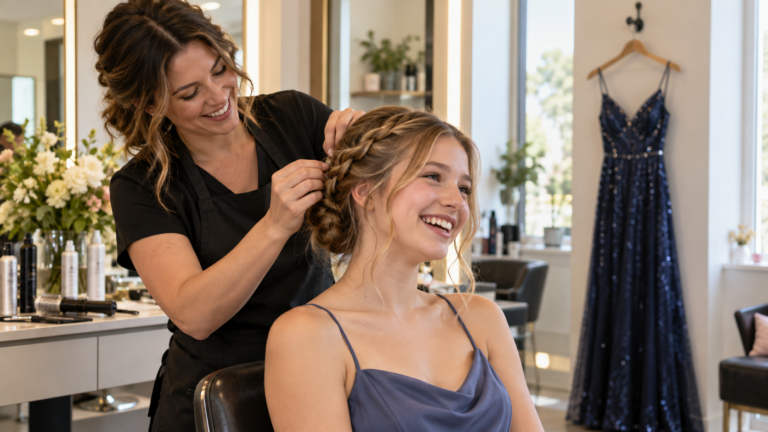
Some styles are simply built for long nights. Braided elements, whether a full braided crown or small braids worked into an updo, hold their structure for hours and look intentional even when they loosen slightly. Low textured buns and chignons are the workhorses of formal hair: elegant in photos, comfortable for hours, and they stand up well to wind and dancing. Half-up styles work beautifully on thick hair with natural grip, as long as the pinned section is properly anchored.
Styles that need more thought: very sleek, glass-straight looks, which demand serious anti-humidity preparation in November, and big soft curls left completely down, which need realistic expectations and a good setting routine. None of these are impossible. They just need a stylist who plans for the hours ahead, uses the right prep and fixing products, and sets the style properly so it cools and locks before you leave the chair.
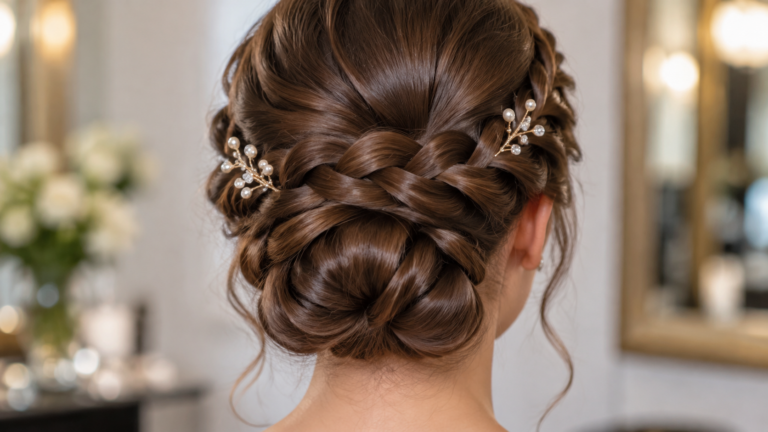
A word on extensions and padding: for finer hair, discreet clip-in pieces or a bit of hidden padding can give an updo the fullness photographs love. This is normal, invisible when done well, and worth discussing at the trial rather than wishing for on the day.
Timing everything around exams
Because the dance sits so close to final exams, the appointment plan matters. Here is the rhythm that works: a trim and colour refresh two to three weeks before, the trial at the same visit or shortly after, and the styling appointment on the day itself, late morning or early afternoon depending on when photos start.
One practical warning about colour. The week of the dance is not the time for a dramatic colour experiment. Fresh colour should be settled and washed at least once before the big night, so anything new belongs at that two-to-three-week appointment, not the day before. If roots or tone need attention close to the date, a gloss or toner is the calm, low-risk answer.

On the day itself
Wash hair the day before, not the morning of, because hair with a day of natural grip tends to hold a style better than freshly washed hair. Arrive at the salon in a button-up or zip-up top so nothing has to go over your head afterwards. Eat something before you sit down, because a styling appointment plus pre-event nerves on an empty stomach is a wobbly combination.
Then let the professionals work. A style built properly in the chair, prepped, pinned, set and finished, is designed to be forgotten about. You should spend your matric dance thinking about anything except your hair.
What hairdressers Claremont matric families know about this night
The real product of a good matric dance appointment is not the updo. It is a teenager who walks into the biggest night of her school life feeling completely confident, and a mother who is not doing emergency pinning in a bathroom at 10pm.
At Snippets Hair Salon in Claremont, our team includes a stylist who has been at the salon for over three decades. Trials, colour, treatments and the big appointment itself all get planned around your exam timetable and photo schedule, so the night itself feels easy.
If the date is circled on the calendar, the time to book the trial is now, while the choice of slots is still yours.
Choosing a style is easier once you know what suits your face and hair, and our guide on how to know which hairstyle will suit you is the perfect place to start.
FAQs
1. When should we book matric dance hair?
Book the trial two to three weeks before the dance and the styling appointment for the day itself as early as you can. Matric season and exam season collide, and late afternoon slots in October and November are the first to go.
2. Is a hair trial really necessary?
Strongly recommended. A trial tests how the style wears over hours, lets the stylist learn how your hair behaves, and checks the whole look with the dress and accessories. It turns the actual day into a relaxed repeat instead of a first attempt.
3. What hairstyle lasts best for a long matric dance evening?
Braided styles, low textured buns and chignons hold best over eight or more hours, and they cope well with wind and dancing. Hair worn fully down can work on hair with good natural grip, but it needs honest expectations and proper setting.
4. Should hair be washed on the day of the dance?
Wash it the day before. Hair with a day of natural grip tends to hold pins and curls better than freshly washed hair, and your stylist will prep it properly for styling on the day.
5. Can we change the plan after the trial?
Of course. That is what the trial is for. If something dropped, pulled or simply did not feel like you, the stylist adjusts the plan so the version on the day is the one you already know you love.
Still collecting ideas for the big night? Our spring hair trends guide shows which of this season's looks are holding up beautifully outdoors in Cape Town.